过渡态分析
本流程适用于包含频率结果的过渡态候选输出。MolOP 可以筛选候选 frame、检查虚频,并按几何生成 前后体候选;它不会优化这些结构,也不会证明反应路径成立。
筛选候选 frame
from molop import AutoParser

batch = AutoParser("results/*.log")
normal = batch.filter_state("normal", n_jobs=-1)
ts_batch = normal.filter_state("ts", n_jobs=-1)

print("解析文件:", len(batch))
print("正常结束:", len(normal))
print("过渡态文件:", len(ts_batch))
计数取决于输入目录。一个文件可能包含多个 frame,因此不要假设 parsed_file[-1] 一定是
filter_state("ts") 选中的 frame,应显式定位:
for parsed_file in ts_batch:
    for frame in parsed_file:
        if frame.is_TS:
            imaginary = frame.vibrations.num_imaginary if frame.vibrations else None
            print(parsed_file.filename, frame.frame_id, imaginary)
is_TS 是程序化候选判断。None 表示源文件证据不足,与 False 不同。
输出中的文件数、frame ID 和虚频数取决于输入数据。
检查虚频
ts_frame = next(
    (frame for parsed_file in ts_batch for frame in parsed_file if frame.is_TS),
    None,
)
if ts_frame is None:
    raise ValueError("输入中没有可用的过渡态 frame")
vibrations = ts_frame.vibrations

if vibrations is None:
    raise ValueError("过渡态候选没有结构化频率结果")

print("虚频数:", vibrations.num_imaginary)
print("频率(cm^-1):", vibrations.frequencies.m_as("cm^-1"))
需要结合频率正负、位移方向和化学含义复核。虚频数量本身不能证明反应路径正确。
沿虚频生成结构
ts_vibration 沿唯一虚频模式位移坐标,并返回候选 Molecule。它要求 frame.is_TS 为真,且可能
因基本拥挤检查而跳过部分几何:
虚频位移候选(图像输出)
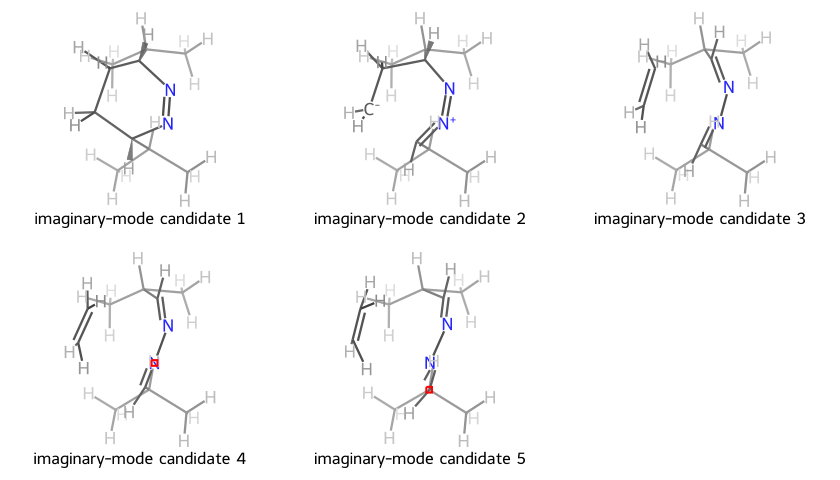
图像由一个具有单个虚频的真实解析 frame 生成。每个面板对应 ts_vibration(...)
返回候选中成功恢复出分子图的一项;二维布局用于比较连接关系,不代表优化后的反应路径。
绘制动图
对任一解析文件调用 draw_animation(...),即可将可绘制 frame 输出为 GIF 或动画 SVG,适用于优化、IRC
和扫描轨迹。无法重建 RDKit 分子图的 frame 会被跳过;只有所有 frame 都不可绘制时才报错。默认 legend
保留原始 frame ID;过渡态 frame 会标记 TS,有总能量时还会加入能量。
trajectory = ts_batch[0]
trajectory.draw_animation(file_path="trajectory.gif", duration=120, size=(640, 480))
trajectory.draw_animation(
    image_format="svg",
    file_path="trajectory.svg",
    duration=120,
    size=(640, 480),
)
指定振动模式时使用 draw_vibration_animation(...);draw_ts_vibration_animation(...) 会自动选择唯一虚频。
两者的默认 legend 都包含模式序号、频率和候选位置。传入 legends=[...] 可自行指定标签。
ts_frame.draw_vibration_animation(vibration_id=0, file_path="mode-0.gif", steps=9)
ts_frame.draw_ts_vibration_animation(file_path="ts-imaginary-mode.gif", steps=9)
推断前后体候选与键变化
try:
    mapped_rxn = ts_frame.to_mapped_rxn_smiles()
    print(mapped_rxn)
except ValueError as exc:
    print("前后体推断失败:", exc)

difference = ts_frame.to_diff_rdmol()
if difference is not None:
    print("差异图键数:", difference.GetNumBonds())
to_reaction 内部从 possible_pre_post_ts 获取前后体候选,按源原子顺序为
每个原子写入从 1 开始的 map number,并返回 RDKit ChemicalReaction。
to_mapped_rxn_smiles() 直接使用本 frame 构建的 Reaction,并导出非 canonical
的 reactants>>products RXN SMILES。若希望请求额外采样,可调用
ts_frame.to_mapped_rxn_smiles(additional=True)。
前后体与虚键差异图(图像输出)
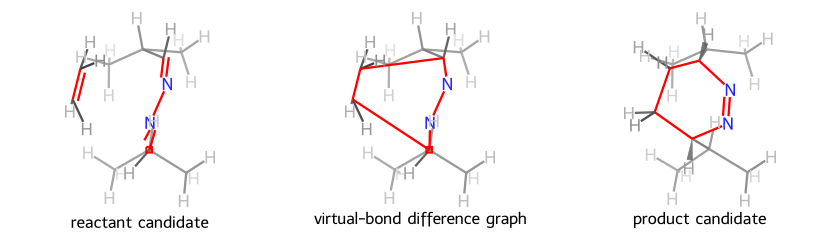
红色标出前后体候选之间发生变化的键。中央面板来自 to_diff_rdmol();其中的零阶键
是 MolOP 的可机读差异标记,生成脚本只在用于绘图的副本中把它们转换为可见线段。
possible_pre_post_ts 返回基于几何的前后体候选,不是优化后的真实反应物和产物。
to_diff_rdmol 在无法推断出支持的断键差异时可能返回 None。自动反应流程使用这些结果前,
仍需检查原子映射、连接关系和原始计算结果。
默认情况下,前后体推断会在虚频振动的正、负两侧分别采样 8 个振幅,范围为
min_ratio=0.6 到 max_ratio=1.4,并按照简谐振子势能等距分布。两侧各自按重建拓扑的出现频次投票,
并为胜出的拓扑保留其最大采样振幅下的三维构象。随后,碎片数更多的候选被判为前体;
碎片数相同时保持负空间、正空间的顺序。steps 用于设置每侧的振幅采样数量。
默认的 sampling_method 是 "harmonic_potential"。如果需要原有的按振幅等距采样,
可显式将 sampling_method 设为 "amplitude":
reactant, product = ts_frame.possible_pre_post_ts(
    show_3D=True,
    sampling_method="amplitude",
)
简谐势能等距采样使用
a_i = sqrt(a_min**2 + i * (a_max**2 - a_min**2) / (steps - 1)),即对
a**2 等距采样。对于虚频模式,这对应于沿反应坐标的势能降低量的绝对值等距采样;
默认的 "harmonic_potential" 方式按势能等距;"amplitude" 方式保持原有的按振幅等距行为。该选项也可传给
additional_pre_post_ts、save_pre_post_ts 和 to_diff_rdmol。
标准前后体仍然是主要结果,不会被额外采样表示替代。保留标准前后体的三维构象后,可以固定 成键或断键相关原子的 endpoint 坐标,只对其余原子重新扫描虚频振动模式,从而得到额外的 一对表示:
standard_pre, standard_post = ts_frame.possible_pre_post_ts(show_3D=True)
additional_pre, additional_post = ts_frame.additional_pre_post_ts(standard_pre, standard_post)
如果标准前后体之间不存在键变化,额外采样会直接返回这对前后体。
下面的 Notebook 图像用真实 TS frame 并列展示标准结果与额外采样结果。额外采样只固定成键或断键相关原子, 因此在某些案例中会让其余原子的重新扫描恢复出不同的碎片拓扑:
标准与额外采样前后体表示(Notebook 图像输出)
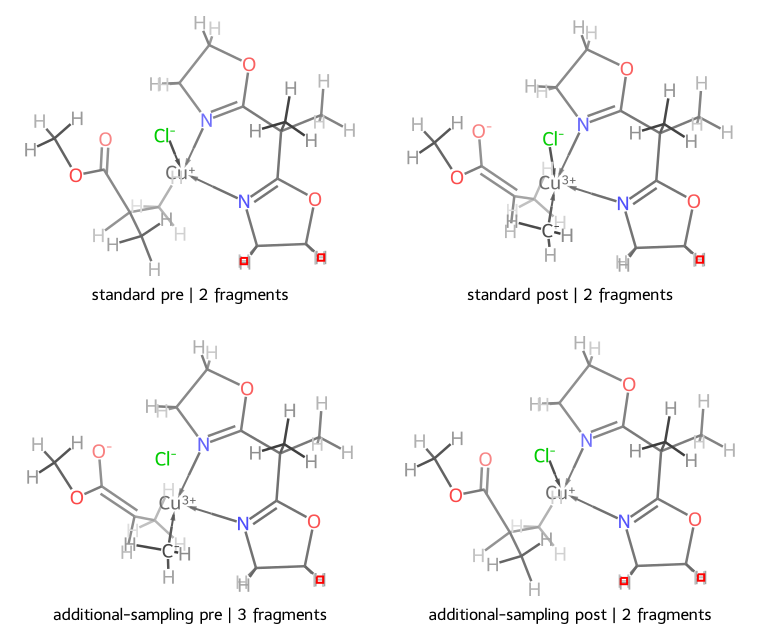
上排是标准前体和后体,下排是额外采样前体和后体。图中碎片数写在每个面板的 legend 中;额外采样结果 是附加表示,不会替换标准前后体。
使用 save_pre_post_ts(...) 可直接将一对候选写成 XYZ(默认)或 SDF 文件;SDF 会保留重建的分子图和
推断得到的三维构象:
pre_path, post_path = ts_frame.save_pre_post_ts("ts-endpoints", prefix="candidate")
sdf_pre_path, sdf_post_path = ts_frame.save_pre_post_ts(
    "ts-endpoints", prefix="candidate", format="sdf"
)
print(pre_path, post_path)
文件保留推断出的三维候选几何,不是已经优化的真实反应物和产物。
省略 prefix 时,带磁盘来源信息的 frame 会将源文件 stem 和 frame ID 加入生成的文件名;仅存在于内存中的
frame 则回退为 ts_frame_<id>。
在解析后的计算文件上调用同名方法,会导出其中全部 TS frame;在批处理对象上调用时,每个支持该操作的 计算文件会写入以完整文件 stem 命名的独立目录,不支持 TS 前后体导出的文件会记录警告并跳过。若不同 目录中的源文件具有相同 stem,MolOP 会追加稳定的源路径摘要,保证输出目录彼此独立:
file_endpoints = trajectory.save_pre_post_ts("ts-endpoints", format="sdf")
batch_endpoints = ts_batch.save_pre_post_ts("ts-endpoints-batch", format="sdf", n_jobs=4)
两种返回值均以原始 frame ID 为键;批处理返回值额外以源文件路径作为最外层键。
相关操作
- 优化轨迹使用
filter_state("opt")和parsed_file.closest_optimized_frame。 - 需要指定振动模式时使用
frame.vibrate(...),不要固定使用第一模式。 - 选中结构后可通过格式转换与导出写出。