论文
2026
Transforming Molecular Synthesis With Large Language Models
Li‐Cheng Xu, De‐Xin Zhu, Miao‐Jiong Tang, Ting‐Ting Liu, Yi‐Ze Liu, Chun‐Hui Ma, Zhe‐Xu Li, Shuo‐Qing Zhang, Xin Hong
2026 Chemistry – A European Journal · DOI
详情
Transforming Molecular Synthesis With Large Language Models
Li‐Cheng Xu, De‐Xin Zhu, Miao‐Jiong Tang, Ting‐Ting Liu, Yi‐Ze Liu, Chun‐Hui Ma, Zhe‐Xu Li, Shuo‐Qing Zhang, Xin Hong
2026 Chemistry – A European Journal · DOI
详情
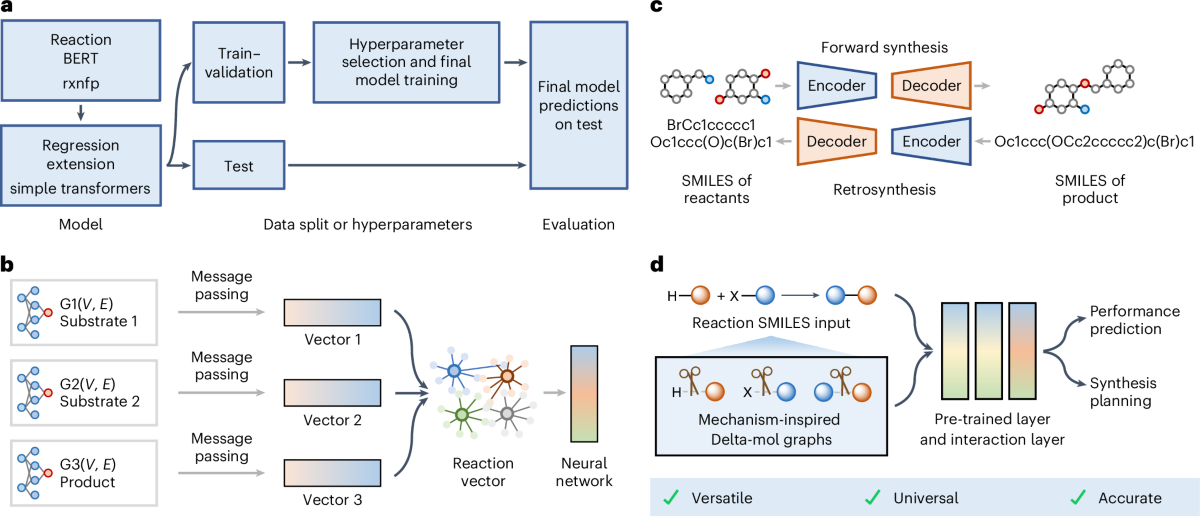
摘要. The integration of large language models (LLMs) into molecular synthesis is rapidly transforming the field, offering a paradigm shift beyond traditional data‐driven approaches. LLMs bring a unique combination of massive knowledge absorption, sophisticated contextual representation, and multi‐step logical inference, holding the potential to intelligently automate the entire synthesis workflow. This review explores how LLMs are revolutionizing molecular synthesis by functioning across four key roles: (1) as interactive domain‐specific knowledge bases for instant expert consultation; (2) as powerful tools for structuring unstructured reaction data from literature; (3) as versatile predictors for molecular properties and reaction outcomes; and (4) as the central “brain” in intelligent agent systems for autonomous synthesis planning and execution. By systematically outlining these advances, we aim to provide a comprehensive roadmap for chemists to leverage the distinctive capabilities of LLMs, thereby accelerating the journey toward a more automated and intelligent future for molecular synthesis.
Data‐Driven Modeling of N,N′ ‐Dioxide/Metal‐Catalyzed Asymmetric Michael Additions
Miao‐Jiong Tang, Tinghui Zhang, Qiuhao Huang, Shuwen Li, Rui Liu, Hongye Li, Xiaofan Chen, Shunxi Dong, Xiaohua Liu, Xiaoming Feng, Xin Hong
2026 Angewandte Chemie International Edition · DOI
详情
Data‐Driven Modeling of N,N′ ‐Dioxide/Metal‐Catalyzed Asymmetric Michael Additions
Miao‐Jiong Tang, Tinghui Zhang, Qiuhao Huang, Shuwen Li, Rui Liu, Hongye Li, Xiaofan Chen, Shunxi Dong, Xiaohua Liu, Xiaoming Feng, Xin Hong
2026 Angewandte Chemie International Edition · DOI
详情
摘要. Rational catalyst design and accurate selectivity prediction remain major challenges in asymmetric synthesis, which is critical for improving and innovating existing catalytic systems. Among them, chiral N , N ′‐dioxide/metal complexes have emerged as a powerful and broadly effective class of privileged catalysts, yet systematic tools for understanding and optimizing their performance remain underdeveloped. Here, we present an integrated data platform that unifies literature curation, mechanistic modeling, and predictive analytics to support intelligent catalyst selection for asymmetric N , N ′‐dioxide/metal‐catalyzed Michael additions. We curated over 2,000 reactions from two decades of research into a chemically annotated, machine‐readable dataset encompassing catalyst structure, reaction conditions, and stereochemical outcomes. This dataset enabled global statistical analyses of application patterns across metal–ligand–substrate combinations and supported a modeling framework that combines intermediate‐informed data augmentation with similarity‐weighted tuning, which improved predictive ability on reactions involving previously unseen substrates. Comprehensive experimental validations covering diverse substrates, ligands, and metals confirmed the model’s robustness and transferability across a wide selectivity range, including the accurate identification of new highly enantioselective transformations. These findings highlight the value of data‐integrated platforms in advancing the development of new reactions within complex asymmetric systems and provide an intelligent framework for future expansion of the N , N ′‐dioxide catalysis.
Asymmetric Desymmetrization of para ‐Quinamines via (3+2) Cycloaddition With 1,3,5‐Triazinanes
Xiangyu Wang, Miao‐Jiong Tang, Zun Yang, Ayao Xiong, Xin Hong, Xiaoming Feng, Xiaohua Liu
2026 Chemistry – A European Journal · DOI
详情
Asymmetric Desymmetrization of para ‐Quinamines via (3+2) Cycloaddition With 1,3,5‐Triazinanes
Xiangyu Wang, Miao‐Jiong Tang, Zun Yang, Ayao Xiong, Xin Hong, Xiaoming Feng, Xiaohua Liu
2026 Chemistry – A European Journal · DOI
详情
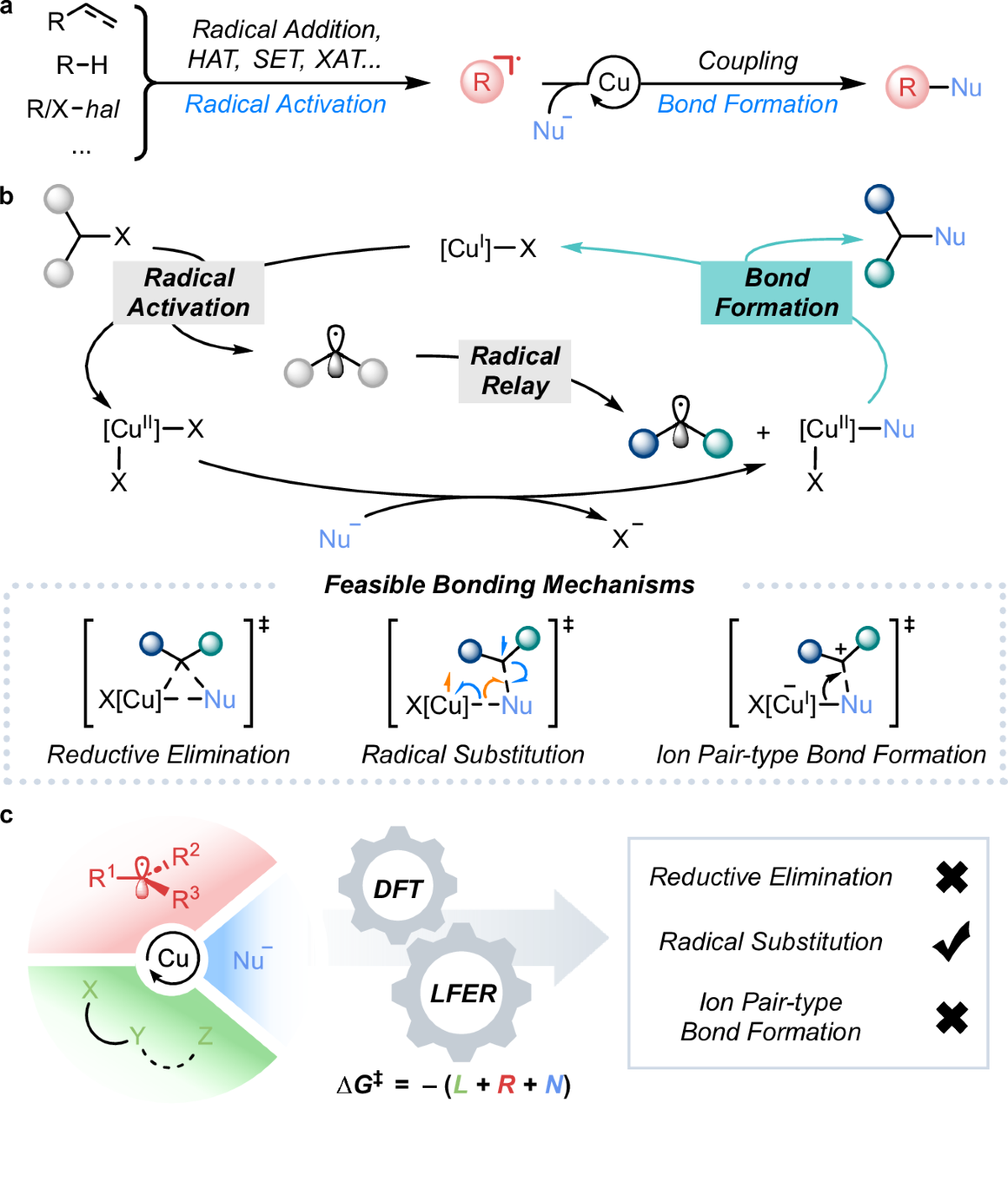
摘要. Asymmetric catalytic synthesis of a number of hydrobenzoimidazoles was achieved from para ‐quinamines and 1,3,5‐triazinane. A chiral rare‐earth metal catalyst of N , N′ ‐dioxide was disclosed to be efficient under mild reaction condition, benefiting the formal (3+2) cycloaddition in good yield and enantioselectivity with exclusively cis ‐diastereoselectivity. The enantioselectivity‐determining step is an intramolecular aza‐Michael reaction, and the optimized catalyst is absent from the existing database of the related asymmetric Michael reaction. The results lead to a useful supplement to the related database for prediction.
2025
Using machine learning methods to predict the diabatic bond dissociation energy of non-heme iron complexes
Zhengwei Chen, Miaojiong Tang, Xiahe Chen, Debo Ding, Jing-Kun Gao, Yuanbin She, Yun-Fang Yang
2025 Organic & Biomolecular Chemistry · DOI
详情
Using machine learning methods to predict the diabatic bond dissociation energy of non-heme iron complexes
Zhengwei Chen, Miaojiong Tang, Xiahe Chen, Debo Ding, Jing-Kun Gao, Yuanbin She, Yun-Fang Yang
2025 Organic & Biomolecular Chemistry · DOI
详情
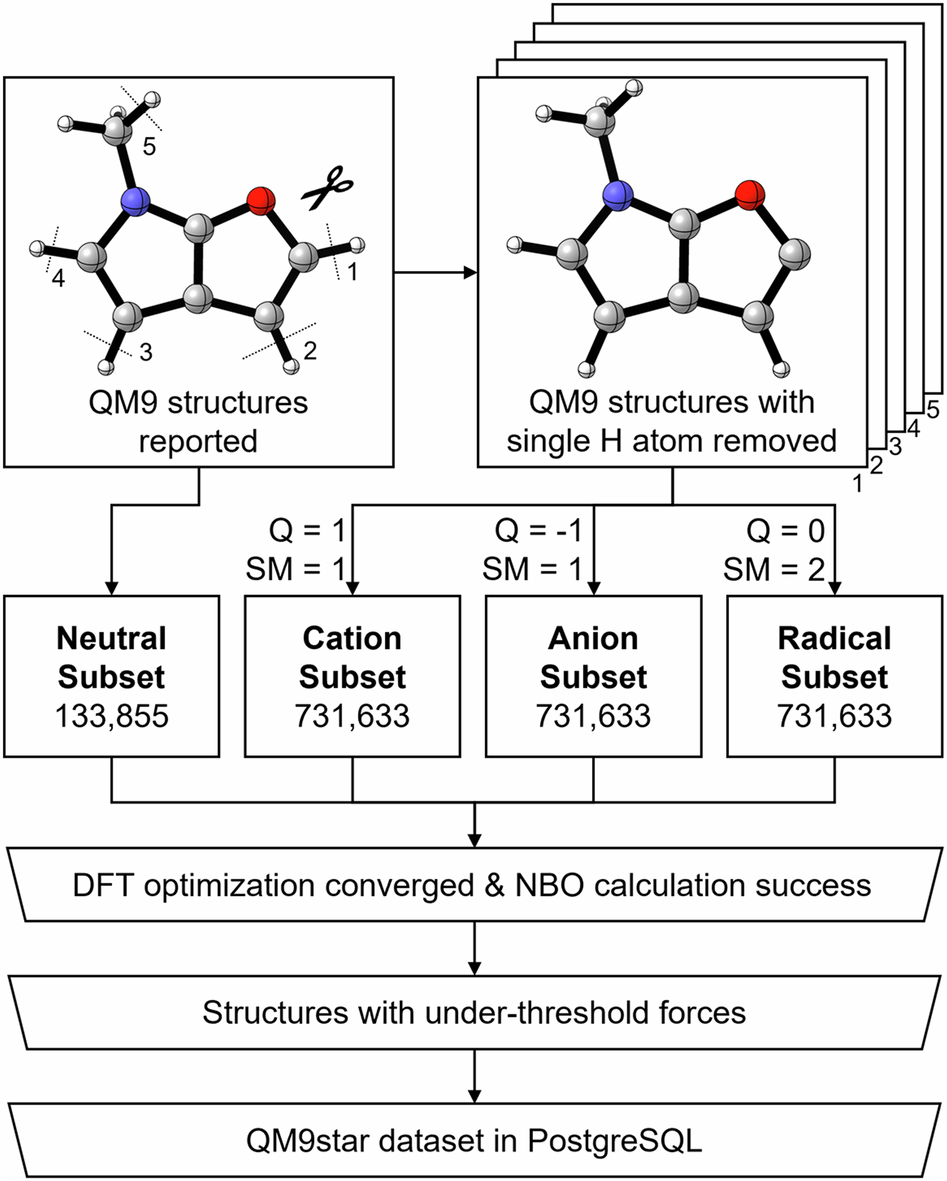
摘要. We collected and built a dedicated dataset for non-heme iron complexes and used machine learning methods to accurately predict the diabatic bond dissociation energy of non-heme iron complexes.
2024
数据驱动的有机分子理化性质预测
Yi-Zhou Sun, Miao-Jiong Tang, Shuoqing Zhang, Xin Hong
2024 Chinese Science Bulletin · DOI
详情
数据驱动的有机分子理化性质预测
Yi-Zhou Sun, Miao-Jiong Tang, Shuoqing Zhang, Xin Hong
2024 Chinese Science Bulletin · DOI
详情
摘要. This review summarizes data-driven approaches for predicting physicochemical properties of organic molecules.
2023
Exploring Spectrum‐based Molecular Descriptors for Reaction Performance Prediction
Miao‐Jiong Tang, Li‐Cheng Xu, Shuo‐Qing Zhang, Xin Hong
2023 Chemistry – An Asian Journal · DOI
详情
Exploring Spectrum‐based Molecular Descriptors for Reaction Performance Prediction
Miao‐Jiong Tang, Li‐Cheng Xu, Shuo‐Qing Zhang, Xin Hong
2023 Chemistry – An Asian Journal · DOI
详情
摘要. Despite the availability and accuracy of modern spectroscopic characterization, the utilization of spectral information in chemical machine learning is still primitive. Here, we report an optical character recognition‐based automatic process to utilize spectral information as molecular descriptors, which directly transforms experimental spectrum images to readable vectors. We demonstrate its machine learning application in the reaction yield dataset of Pd‐catalyzed Buchwald‐Hartwig cross‐coupling with aryl halides. In addition, we also show that the predicted spectrum can serve as an alternative encoding source to support the model training.
2021
Towards Data‐Driven Design of Asymmetric Hydrogenation of Olefins: Database and Hierarchical Learning
Li‐Cheng Xu, Shuo‐Qing Zhang, Xin Li, Miao‐Jiong Tang, Pei‐Pei Xie, Xin Hong
2021 Angewandte Chemie International Edition · DOI
详情
Towards Data‐Driven Design of Asymmetric Hydrogenation of Olefins: Database and Hierarchical Learning
Li‐Cheng Xu, Shuo‐Qing Zhang, Xin Li, Miao‐Jiong Tang, Pei‐Pei Xie, Xin Hong
2021 Angewandte Chemie International Edition · DOI
详情
摘要. Asymmetric hydrogenation of olefins is one of the most powerful asymmetric transformations in molecular synthesis. Although several privileged catalyst scaffolds are available, the catalyst development for asymmetric hydrogenation is still a time‐ and resource‐consuming process due to the lack of predictive catalyst design strategy. Targeting the data‐driven design of asymmetric catalysis, we herein report the development of a standardized database that contains the detailed information of over 12000 literature asymmetric hydrogenations of olefins. This database provides a valuable platform for the machine learning applications in asymmetric catalysis. Based on this database, we developed a hierarchical learning approach to achieve predictive machine leaning model using only dozens of enantioselectivity data with the target olefin, which offers a useful solution for the few‐shot learning problem and will facilitate the reaction optimization with new olefin substrate in catalysis screening.
A Molecular Stereostructure Descriptor Based On Spherical Projection
Shuo-Qing Zhang, Xin Hong, Li-Cheng Xu, Xin Li, Miao-Jiong Tang, Luo-Tian Yuan, Jia-Yu Zheng
2021 Synlett · DOI
详情
A Molecular Stereostructure Descriptor Based On Spherical Projection
Shuo-Qing Zhang, Xin Hong, Li-Cheng Xu, Xin Li, Miao-Jiong Tang, Luo-Tian Yuan, Jia-Yu Zheng
2021 Synlett · DOI
详情
摘要. Description of molecular stereostructure is critical for the machine learning prediction of asymmetric catalysis. Herein we report a spherical projection descriptor of molecular stereostructure (SPMS), which allows precise representation of the molecular van der Waals (vdW) surface. The key features of SPMS descriptor are presented using the examples of chiral phosphoric acid, and the machine learning application is demonstrated in Denmark’s dataset of asymmetric thiol addition to N-acylimines. In addition, SPMS descriptor also offers a color-coded diagram that provides straightforward chemical interpretation of the steric environment.